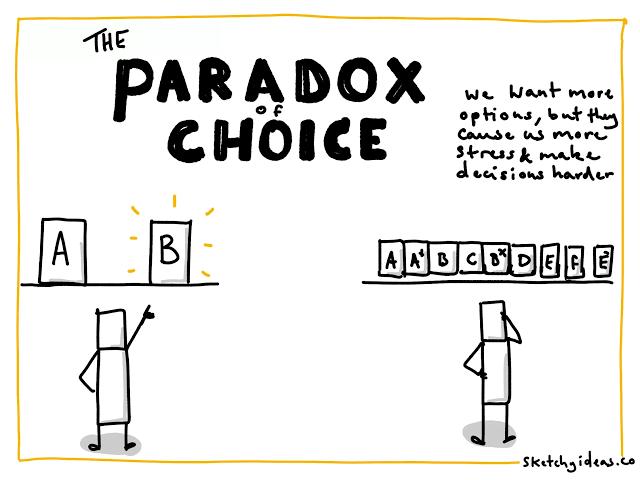
We live in an age where choice is celebrated. From thousands of Netflix blockbusters, hundreds of career paths, multiple social identities to various academic electives. Choice is everywhere. We naturally believe that more options mean more freedom, more control, and ultimately better lives.
But what if that belief is wrong? That is the insight of the concept known as the Paradox of Choice.
As opposed to the idea that choice can be liberating, it can lead to anxiety, stress, indecision and sometimes, regret. While choice can empower us, too much of it can be crippling.
When Choice becomes Paralysis
In theory, having several choices should be exciting, but practice, it can actually be paralyzing.
A student with so many “appealing” course choices would spend more time weighing the merits and demerits of each course than actually making a decision. The fear of choosing the “wrong” course causes hesitation, second-guessing and procrastination.
In this case, instead of clarity, choice breeds confusion which in turn leads to paralysis.
The Happiness Trap of the “Best” Option
Imagine going to a grocery store to get Mayonnaise, you get one and it doesn’t end up being perfect. It is easy to imagine that you could have made a different choice that would have been better.
When there are many options available, it becomes easier to focus on what might have been better about the ones you didn’t choose.
Today, we just don’t want a good option, we want the best option.
This drive to choose the absolute best decision often backfires and creates: Higher expectations, Self-blame when outcomes aren’t perfect and regret over the choice not chosen.
What truly happens when there are no limits?
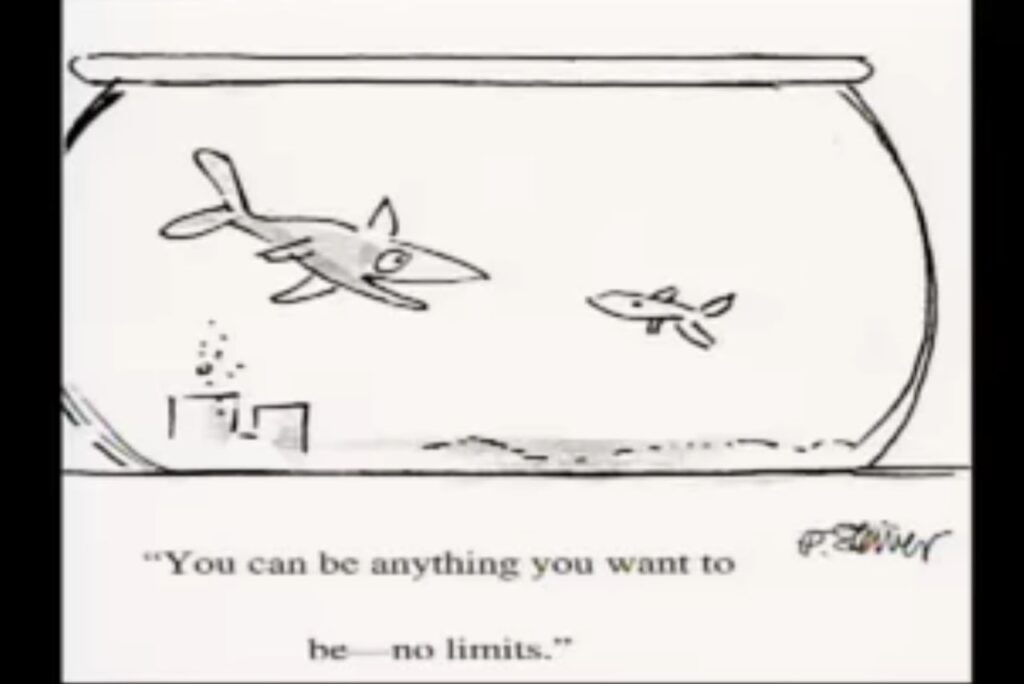
The image of the fish in a bowl with the message “You can be anything you want to be — no limits” helps illustrate the paradox of choice discussed earlier. At first, the statement appears encouraging because modern society often promotes unlimited possibilities as the key to success and happiness. However, the image also invites a deeper question: what happens when there are truly no limits? In this context, the fishbowl is a symbol of structure and guidance rather than restriction.
Without the bowl, the fish would technically have more freedom, but it would also lose the environment that allows it to survive. This reflects the idea that too many options can sometimes create confusion, hesitation, and dissatisfaction. Just like the fish needs the bowl to function properly, people often make better decisions when choices are manageable rather than endless. Therefore, the illustration reinforces the argument that while choice is important, unlimited possibilities are not always beneficial.
Everyone needs a fishbowl,the absence of it is a recipe for misery.
Conclusion
While some choice is better than none, more choice is not always better than some choice.
In the end, the paradox of choice reminds us that freedom is not simply about having more options, but about having the right amount of them. While choice can empower us, an excess of possibilities often replaces confidence with doubt and satisfaction with regret. True well-being comes not from limitless options, but from meaningful ones that provide direction rather than confusion. Just as the fish depends on the bowl for survival, people thrive when their choices exist within structures that guide rather than overwhelm them. Therefore, the goal is not to eliminate choice, but to recognize that boundaries are not enemies of freedom; they are often what make freedom possible.
To read more pieces like this, click here

This is a great piece