

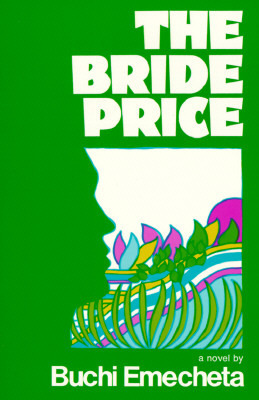
If you are looking for a book that speaks to the oppression and objectification of women, the clash between tradition and modernity, and the significance of customs, then Buchi Emecheta’s The Bride Price is the book for you.
In this book, Buchi Emecheta tells the story of a young girl, Aku-nna, who grew up in Lagos, Nigeria. It follows as she navigates loss, a new environment, growth, and love while she deals with the constraint of traditions.
At first, it feels like every other story. Aku-nna’s father loves her and she looks forward to the future. But everything changes drastically when her father dies. The debate over who will sit by her father’s body at his wake presents the first clash of tradition with modern customs. What should have been a straightforward mourning process becomes complicated by questions of identity, belonging, and tradition.
After her father’s death, Aku-nna returns with her family to her native land, Ibuza. There, she faces the harsh reality that her bride price determines her worth. It is striking how that young girls are considered properties who are simply sold to the highest bidder. Their education, dreams, and opinions are simply irrelevant in comparison to how much they can fetch their ‘owners’.
Aku-nna’s love for Chike, her school teacher, provides a glimmer of hope. However, Chike’s status as an Oshu (the descendant of slaves) generates hostility from all sides. Aku-nna, like many other women, has a difficult choice to make. She is to either defy tradition and choose love or to succumb to societal expectations. She chooses to defy tradition and for a moment it seems as if their love will be enough to sustain them. Until it isn’t.
The belief that a woman whose bride price is not paid will not survive the birth of her first child looms like a cloud over Aku-nna all her life. She eventually dies right after the birth of her first child. And that strengthened the belief about a woman whose bride price is not paid. Whether her death was a fulfilment of the superstitious belief or was simply a coincidence is a question that remains unanswered.
I honestly anticipated a happy ending for Aku-nna and Chike after all their troubles. I hoped that their love would be enough to overcome societal obstacles. But Emecheta clearly had a message to convey. She avoided the happy-ending cliché and emphasized the reality of the psychological hold these traditional beliefs still have on people today, despite civilization.
Although the book ends on a tragic note, it is deeply impactful. Emecheta writes very simply, reminding us that some traditions, when left unquestioned, can cost more than we are willing to admit.
You can get the book here. If you enjoyed reading this piece, then you can check out other book reviews here.

Leave a Reply