
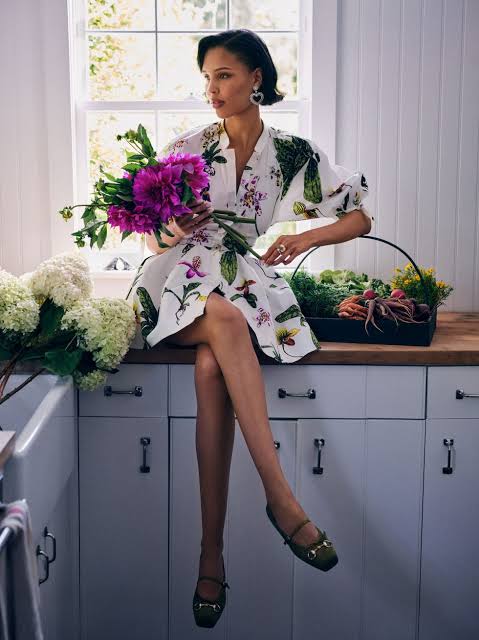
Flour dusted across a wooden countertop. Bread rising by the window. A flourishing vegetable garden. A soft-spoken woman who could make any and everything from scratch as long as it was requested or craved. Extremely stylish while doing so too. It looked like the internet’s definition of the perfect tradwife . Millions watched. Thousands admired it. Just as many criticized.
There was only one problem: she never actually called herself a tradwife.
So who is responsible for the narrative that followed? The creator who understood exactly what aesthetic she was cultivating, or the audience that mistook carefully curated content for a complete biography?
Why People Feel Misled
Nara’s content borrowed heavily from the visual language associated with tradwife culture. The soft, low-pitched voice, homemade meals from scratch, and domestic scenes all reinforced that perception.
Creators know aesthetics communicate ideas beyond words, and silence can sometimes function as endorsement when audiences repeatedly assign a particular label.
If you benefit from an image, some argue, you also inherit some responsibility for the misconceptions surrounding it.
Nara’s Defense
Nara never identified as a tradwife. She has a career and regularly travels for work. She never explicitly hid this part of her life although her career rarely took center stage in her content.
One thing her content didn’t hide was her husband, Lucky, sharing domestic responsibilities. He does the dishes after every meal she makes because Nara doesn’t like them. He takes care of the kids and stays with them whenever Nara is busy or has to travel for work.Nara recently went on to a podcast and gave tangible reasons why she isn’t a tradwife using the definition of the term.
She stated that she does not, in any way, shape, or form, align with the definition of a tradwife.
Audiences often project labels onto creators because humans naturally seek categories.
The Tension
Then came the podcast. The voice audiences had come to associate with her videos disappeared. In its place was a more conversational tone, prompting some viewers to wonder whether even her voice had been part of the aesthetic all along.
Netizens argue Nara knew the narrative she was selling. Nara says she is multi faceted, being able to be a wife and a boss babe.
This then beg the questions:
Is an aesthetic a promise?
At what point does branding become deception?
Are we consuming lifestyles or constructing them?
Can someone enjoy traditionally feminine hobbies without subscribing to traditional gender roles?
Beyond The Algorithm
Perhaps this controversy was never really about one woman. Perhaps it was about how quickly we mistake aesthetics for ideology, content for character, and carefully framed moments for complete truths.
She insists she never claimed the title. The internet insists she benefited from wearing it.
Maybe both things are true. Perhaps two truths can coexist.
The real question isn’t whether she was ever a tradwife. It’s whether we saw a woman or simply the story we wanted her to tell.
In an era where creators carefully curate moments rather than document entire lives, audiences increasingly mistake consistency for authenticity and aesthetics for identity.
Want to watch Nara’s podcast, click here
Want more content like this, click here

Leave a Reply