

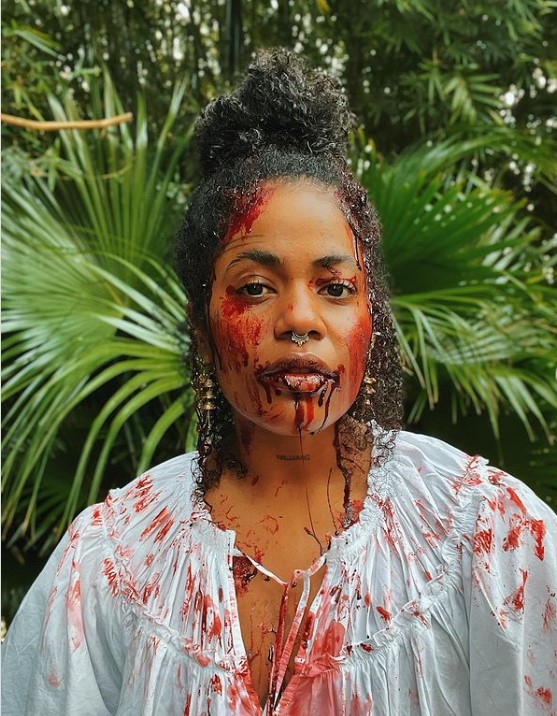
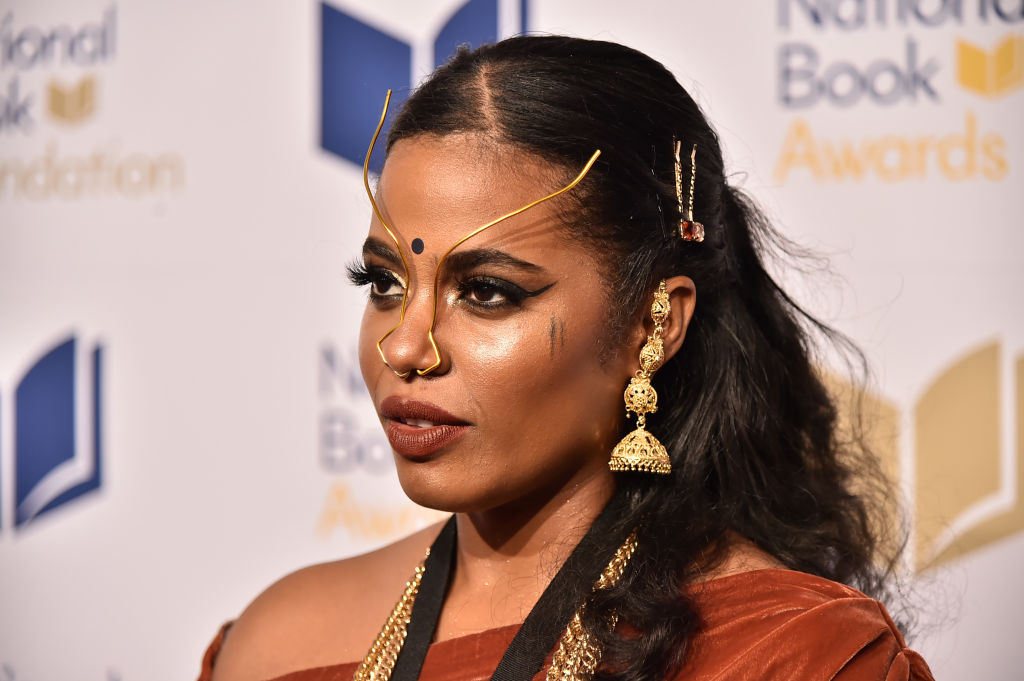
Akwaeke Emezi is a New York Times bestselling Nigerian author who has written eight books in total, spanning several genres. They are transgender and non-binary and use they/them pronouns. They are also a self-described ogbanje. Emezi is an Igbo and Tamil writer who focuses on stories that centre on Africans, especially queer Africans. They have been featured on Time as a Next Generation Leader and have also appeared in the 2018 National Book Foundation’s 5 under 35 list.
Early Life and Background
Akwaeke Emezi was born to an Igbo Nigerian father and a Tamil Sri Lankan immigrant mother in Umuahia, Abia state. They grew up in Aba in the ‘90s and were a voracious reader in their childhood. According to them, they grew up using fantasy worlds to escape the riots and violence that surrounded them.
At 16, Emezi moved to the Appalachian region of the United States to attend university. They later dropped out of veterinary college, instead receiving a New York University MPA in international public policy and non-profit management. In 2014, they attended Chimamanda Ngozi Adichie’s Farafina Trust Creative Writing Workshop in Lagos.
Creative Works by Akwaeke Emezi
Akwaeke’s debut novel Freshwater is a semi-autobiographical story of a Nigerian girl who is an ogbanje, an Igbo evil spirit born with one foot in the spirit realm. It was a New York Times Notable Book of 2018 and was long-listed for many awards. Emezi admits that this book is largely based on their own life, and they only made it semi-autobiographical to appeal to the non-Black market.
While Freshwater was an attempt to tell their story behind a shield of fiction, Emezi’s later book Dear Senthuran is the opposite. Dear Senthuran: A Black Spirit Memoir is a proper autobiography which exposes all the raw details of their life, from their upbringing in Aba in the ‘90s to their life in the US, discovering they were transgender, and everything else that has come with that.
Other books by Akwaeke Emezi include:
- You Made a Fool of Death with Your Beauty, a romance novel
- The New York Times bestselling book The Death of Vivek Oji
- PET, a YA book
- A poetry collection called Content Warning: Everything.
Akwaeke occasionally ventures into other creative media aside from literary writing. They have written and directed two short films titled Hey Celestial and Ududeagu. They have also released an EP called Stop Dying, You Were Very Expensive!
With their work, Emezi aims to channel the ideas and possibilities put in their mind by freedom fighters and activists. They describe themself as an amplifier, doing the important work of storytelling that helps people imagine a freer world.
Controversies
Akwaeke has notably clashed with Chimamanda Ngozi Adichie online. According to Emezi, Chimamanda pulled support for their book Freshwater over some tweets. The tweets in question had Emezi criticizing what they perceived as transphobia on Chimamanda’s part. Chimamanda wrote an essay in response titled It is Obscene. In it, she claimed Emezi used her name to sell their book without permission. Although she did not name Akwaeke in the essay, Emezi admitted on social media that she was one of the people referred to in it.
Freshwater was nominated for the Women’s Prize for Fiction. This was the first time in the 27-year existence of the award that a nonbinary transgender person would be nominated for this award. The Women’s Prize judge claimed she did not know that Akwaeke Emezi was nonbinary. Later, when Akwaeke Emezi submitted The Death of Vivek Oji to the Women’s Prize, the board asked them to state their sex as specified by law. In response, they withdrew their submission, claiming the request was transphobic and exclusionary to trans women.
Conclusion
Akwaeke Emezi is a unique Nigerian artist that champions ideas commonly seen as taboo or at the very least un-African. They refuse to quell their voice, choosing instead to draw the world’s attention to Black, queer, and African voices. As they put it: “I’ve made a conscious decision to be visible — in flesh terms — as queer and trans and nonbinary and Black and Nigerian, to make my existence loud, to make my work loud, because I know in a world like this, it means something for me to be alive.”
If you enjoyed this, you can check out other author profiles and interviews here.

Leave a Reply