

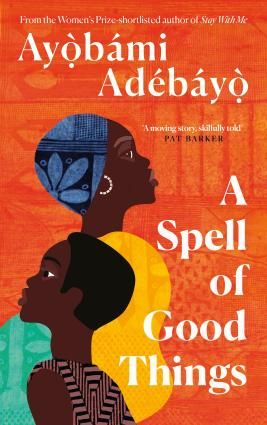
Ayọ̀bámi Adébáyọ̀’s A Spell of Good Things review reveals something most readers miss on first encounter: this is not a political novel masquerading as literature, though many have read it that way. Rather, it is a devastating portrait of how systems, economic, social, political do not merely constrain individual lives; they actively fashion them, sculpt them, and ultimately destroy them.
The book operates on a deceptively simple structure: two lives, two families, opposite ends of the economic spectrum. A Spell of Good Things review opens with Ẹniọlá, sixteen, a boy who looks like a man because childhood has been truncated by circumstance. His father lost his job. This is not opening tragedy of a redemption arc; it is the establishing fact of a descending trajectory. Ẹniọlá spends his days running errands for a tailor, collecting newspapers, begging when required. He still dreams of a big future, but the novel makes clear that dreams, in Nigeria’s economy, are luxuries reserved for families that can afford their disappointment.
Wúràọlá is twenty-eight, a golden girl made manifest. She is a doctor, an accomplishment requiring resources and stability her family provided. A Spell of Good Things review contrasts her with Ẹniọlá through her engagement to Kúnlé, volatile son of a politician running for governorship. She accepted his proposal not from love, but exhaustion, the exhaustion of being unmarried at twenty-eight, answering questions about her reproductive timeline, existing in a society that has decided her value is proportional to her availability
On the surface, these two characters barely overlap. Ẹniọlá works in a tailor shop where Wúràọlá’s mother commissions a dress for her birthday. They share a moment a transaction, nothing more. Yet A Spell of Good Things review uncovers what the novel reveals: the systems that oppress them are identical. Family expectations and social position imprison both. Desperation drives their survival attempts. Violence awaits them both, though it takes different forms.
Adébáyọ̀’s narrative split between two characters forms the novel’s central argument, not mere stylistic flourish. Hold two contradictory truths: Ẹniọlá’s desperation crushes and unforgiving. Wúràọlá’s wealth masks equally suffocating suffering. The novel refuses to rank their pain. Instead, it demonstrates that inequality strips choice, not merely resources.
“I don’t want to come back next summer,” Wúràọlá tells her mother. “I want to choose what happens to me.” But choice, A Spell of Good Things review argues, is not available to either of them. Ẹniọlá’s mother refuses him school fees, seeing her daughter as future stability and her son as a lost cause. He enters the orbit of Honourable Fẹ̀sọ̀jaiyé, a politician running against Kúnlé’s father. What begins as apprenticeship in corruption becomes darker. Ẹniọlá transforms his powerlessness into weaponized self-destruction.
Wúràọlá, meanwhile, discovers that Kúnlé’s volatility is not romantic intensity but abuse masquerading as passion. He slaps her at a party. Her movements become monitored. Jealousy consumes him over her hospital work, as if her dedication to patients betrays her dedication to him.
Yet she stays. She plans the wedding. She performs the role of the grateful fiancée because the alternative admitting that she chose wrong, that she made a mistake that will require humiliation to undo, is unbearable. The novel shows us that this is how abuse flourishes: not in darkness, but in plain sight, in the spaces where family honor and social obligation create a perfect silence.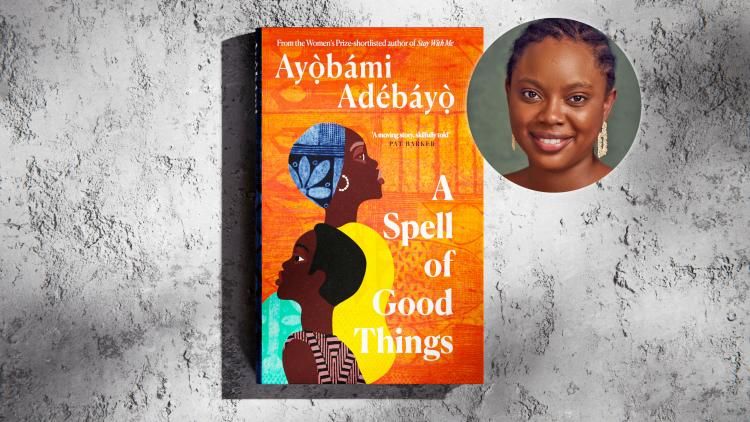
Adébáyọ̀’s prose is remarkable for its restraint. She writes with the precision of a person documenting a crime scene. The red dust caked on Ẹniọlá’s white socks from long walks to school. The soft headscarf worn by Wúràọlá’s mother that “barely whispered” when she moved. These are not ornamental details; they are the evidence of lives being lived at the margins, or within the boundaries of prescribed femininity. Every image carries the weight of a system that tolerates both the grinding poverty that forces Ẹniọlá to walk miles daily and the suffocating propriety that demands Wúràọlá smile through her fiancé’s violence.
Four parts structure the novel, each one tightening the noose. We watch Ẹniọlá’s descent into political corruption with the inevitability of watching a person fall down stairs, each step down feels logical, even necessary, given the step before it. We watch Wúràọlá’s resistance crumble under the weight of social expectation. And we watch the election approach like a storm front, knowing that when the two families’ political fortunes collide, the people who matter least—Ẹniọlá and Wúràọlá themselves—will bear the consequences.
The novel’s title echoes Yèyé’s observation; Wúràọlá’s mother’s bitter wisdom that life consists of fundamentally a series of battles punctuated by rare moments of reprieve. But Adébáyọ̀ asks: what if the spell of good things is so brief, so fragile, that it barely registers as relief before the next battle begins? What if the good things are merely the intervals between catastrophes, and not evidence that survival is possible?
What makes A Spell of Good Things remarkable is not its exploration of political corruption, though it does that with devastating clarity. It is not its analysis of gender inequality, though Wúràọlá’s story is a masterclass in how patriarchy operates through the people who claim to love you. It is Adébáyọ̀’s refusal to offer redemption. She does not allow her characters the comfort of epiphany or growth. They are not ennobled by their suffering; they are simply destroyed by it. This is brutal and uncompromising. This is also true.
The novel asks: what do we owe to people at the bottom of the economic hierarchy? And then it answers: nothing. Nothing at all. We ignore them with indifference, and when they finally demand to be seen, we attack them with violence.
Reading A Spell of Good Things demands discomfort. Adébáyọ̀ refuses to make her characters likable or her situations redeeming. Instead, she makes them real, a far more demanding choice. She forces you to sit with the full weight of Ẹniọlá’s desperation, to feel the suffocation of Wúràọlá’s constrained life, and to recognize that these circumstances are not exceptional but the ordinary machinery of an unequal society.
This is a novel that holds your face and shows you the reality that millions of people live. And then it doesn’t look away.
You want to read more beautiful contents like this? CLICK HERE

Leave a Reply